FREE RETURNS. STANDARD SHIPPING ORDERS $99+

The Unshakable Backbone of Automation: Core Advantages of Column Palletizers

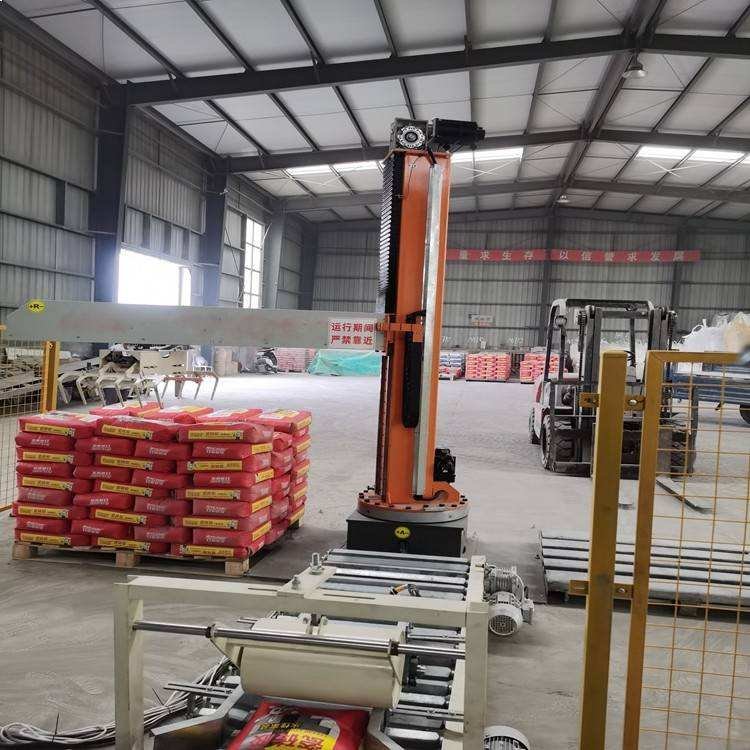
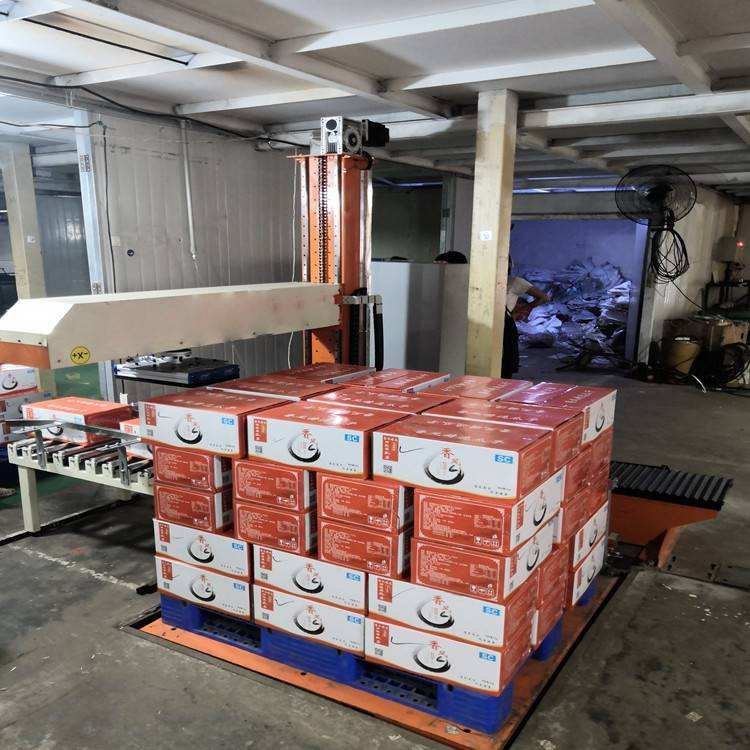
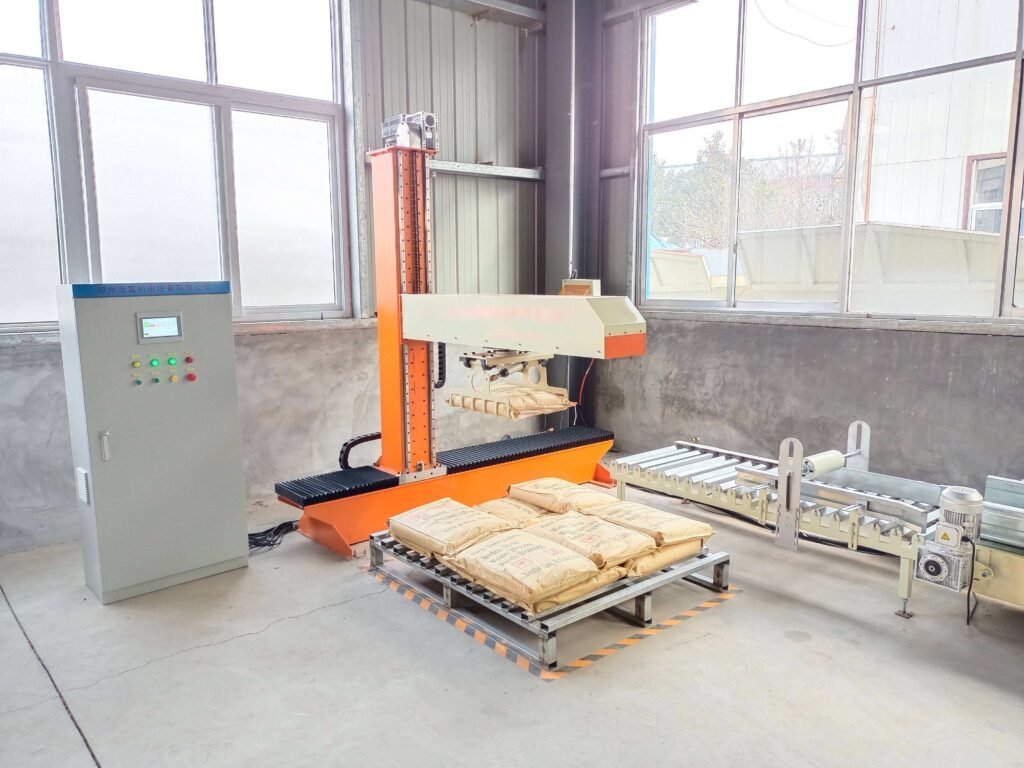
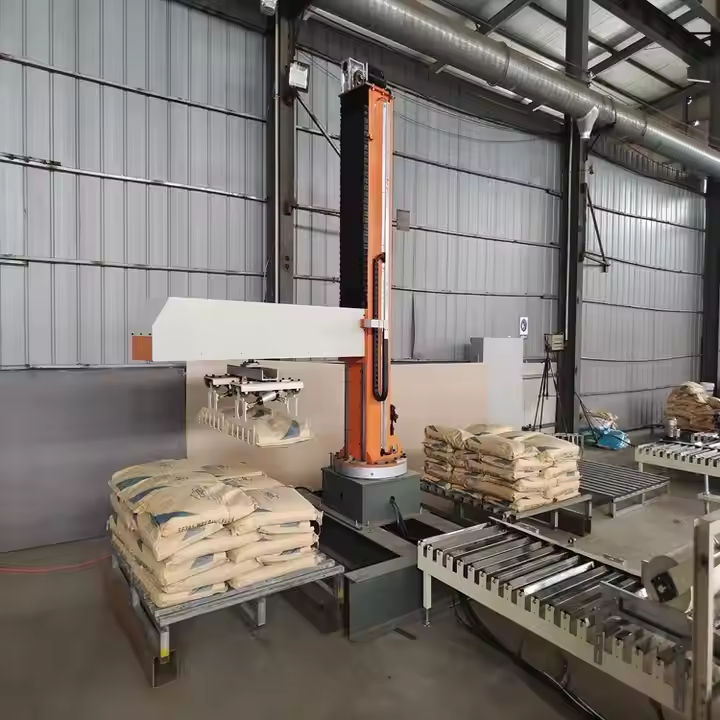
While robotic arms capture attention with their flexibility, column palletizers remain the unsung heroes of heavy-duty industrial automation. These robust systems deliver unparalleled reliability where it matters most – in high-volume production environments demanding unwavering stability and efficiency. At Yuhang Technology, we’ve engineered column palletizers that embody China’s precision manufacturing capabilities while addressing global industrial needs.
I. Structural Superiority: The Foundation of Reliability

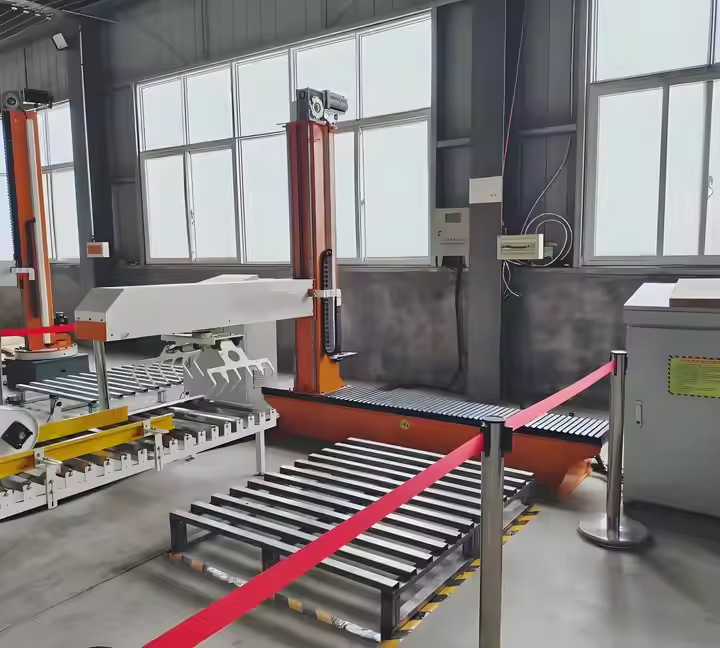
Vertical Column Design Advantages

  • Extreme Load Capacity: Handles 50-1000kg unit loads (building materials, chemical drums, automotive components)
  • Vibration Resistance: <0.5mm deviation during high-speed operation
  • Maintenance Efficiency: 30% fewer moving parts vs. articulated robots

Industrial Impact: Chinese manufacturing refinements have enhanced structural integrity while reducing steel usage by 15% through computational optimization.

II. Performance Excellence in Demanding Environments

Optimized for Continuous Operation

  • Speed & Precision: 80+ cycles/minute with ±0.5mm repeatability
  • Motion Efficiency: Linear axis movement reduces energy consumption 25% vs. robotic systems
  • 24/7 Durability: Tested for 100,000+ hours in cement and chemical plants

Real-World Example: A beverage facility achieved 99.3% uptime using column palletizers for 20kg crate handling.

III. Operational Cost Advantages

Total Ownership Benefits

AdvantageImpactSector Example
Labor Reduction3-5 operators replacedFood packaging
Damage Prevention<0.2% product lossElectronics
Space Optimization40% smaller footprintCompact facilities
Energy Efficiency15-30% lower consumptionSustainable operations

Maintenance Advantage: Simplified components enable faster repairs – critical spare parts changeover in <30 minutes.

IV. Specialized Environmental Adaptation

Engineered for Extreme Conditions

  • Protection Systems: IP66-rated models withstand washdowns (dairy/pharma)
  • Corrosion Resistance: Stainless steel variants for chemical plants
  • Low-Temperature Operation: -30°C performance for frozen food logistics

Yuhang Innovation: Our patented sealing systems extend bearing life 2X in high-humidity environments.

V. Industry-Specific Solutions

Dominant Applications

  • Beverage Industry: 2000+ bottles/hour palletizing
  • Building Materials: 50kg cement bag stacking
  • Automotive: Engine block palletizing
  • Bulk Logistics: Standardized container loading

Operational Comparison

MetricColumn PalletizerRobotic Arm
Max Payload1000kg300kg
Speed (boxes/hr)3000+1500
FootprintCompactLarge safety zone
ChangeoverProgram-basedMechanical + program

Strategic Value Proposition

Column palletizers deliver compounding returns:

  • <18 month ROI through labor and efficiency gains
  • 99%+ operational reliability in continuous processes
  • Future-ready platforms supporting IIoT integration

At Yuhang Technology, our column palletizers incorporate China’s manufacturing excellence in precision engineering and value optimization. Designed in Shanghai and validated in global operations, they represent the perfect balance of Eastern efficiency and industrial durability.
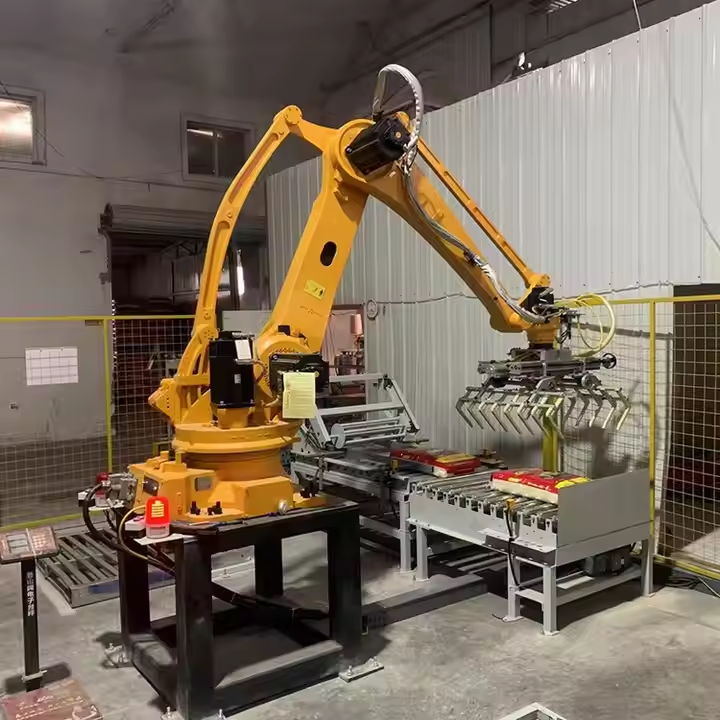
The Efficiency Engine: Core Advantages of Robotic Palletizing Arms

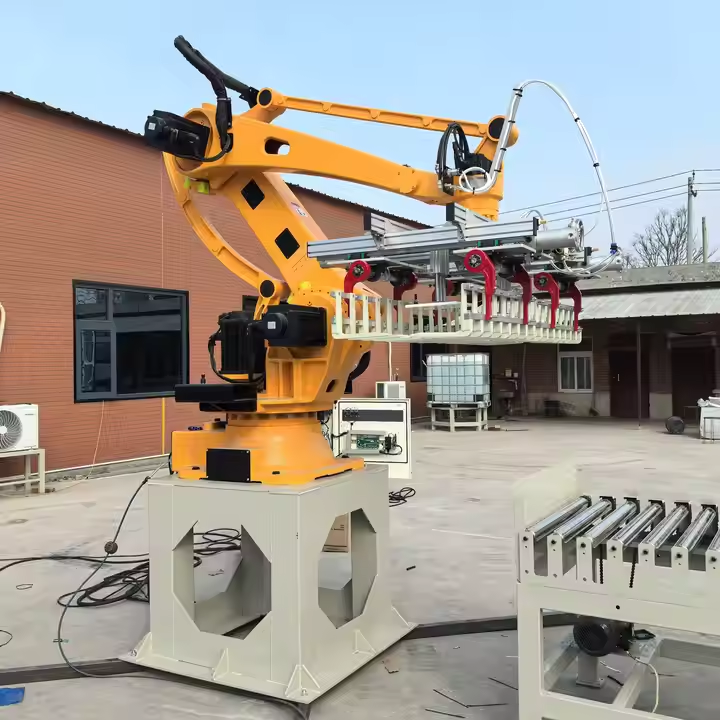
In the heart of modern factories and distribution centers, robotic palletizers have evolved from novel equipment to essential productivity engines. These intelligent systems outperform traditional methods through five transformative advantages that redefine logistics efficiency.

1. Unmatched Flexibility & Adaptability

3D Movement Mastery
Multi-joint designs (4-6+ axes) enable fluid movement in confined spaces – rotating, extending, and reaching where fixed systems cannot. This allows:

  • Complex stacking patterns (interlocked, rotated, or mixed-SKU pallets)
  • Operation around existing equipment without line reconfiguration
  • Simultaneous servicing of multiple conveyors at varying heights

Intelligent Vision Integration
2D/3D vision systems enable:

  • Random bin picking of disorganized items
  • Real-time position correction for misaligned packages
  • Automated product sorting during palletizing

Rapid Changeover Capability

  • Program-based adjustments replace mechanical reconfiguration
  • Universal grippers handle diverse packaging formats
  • <5-minute product changeovers support high-mix production

2. Precision Performance

Reliable Throughput

  • Consistent 24/7 operation at optimized speeds
  • ±0.1mm repeat positioning accuracy
  • Predictive maintenance minimizes unplanned downtime

Optimized Motion Efficiency

  • AI-path planning reduces cycle times by 15-30%
  • Smooth acceleration curves prevent product damage
  • Continuous operation maintains line balance

3. Operational Cost Transformation

Labor Optimization

  • Replaces 3-5 manual workers per shift
  • Eliminates ergonomic injuries from heavy lifting
  • Operates in harsh environments (-20°C to 50°C)

Total Cost Reduction

  • 30-50% lower product damage versus manual handling
  • 20% higher trailer space utilization through perfect stacking
  • Reduced training costs with intuitive programming

4. Quality Assurance

Process Consistency

  • Eliminates human performance variability
  • Maintains GMP compliance in pharma/food sectors
  • Generates digital pallet records for full traceability

Contamination Control

  • Minimal human-product contact
  • Cleanroom-compatible models available
  • IP67 protection for washdown environments

5. Future-Ready Platform

Industry 4.0 Integration

  • OPC-UA communication for MES/ERP connectivity
  • Real-time production analytics dashboard
  • Predictive maintenance alerts

Scalable Intelligence

  • Machine learning optimization of stacking patterns
  • Digital twin simulation for layout planning
  • Collaborative models (cobots) for hybrid workcells

Strategic Impact
Robotic palletizers deliver compounding returns:

  • 12-18 month ROI through labor/productivity gains
  • 30% throughput increase via uninterrupted operation
  • Future-proof scalability for evolving logistics needs

At Yuhang Technology, we engineer palletizing solutions that harness these advantages. Our Chinese-manufactured systems combine precision engineering with intelligent software, helping global operations build resilient, efficient supply chains.

The World of Palletizing Machines: Robust Arms of Automated Warehousing

In modern logistics and production facilities, palletizers serve as indispensable mechanical giants. These tireless systems precisely stack products – from beverage cases to chemical sacks and delicate electronics – creating stable pallet loads for storage and transport. As automation transforms global industries, palletizer varieties have diversified to meet countless application needs. Understanding these “mechanical arms” is crucial for optimizing workflows and boosting efficiency.

I. Structural Forms: The Framework Dictating Function
The core distinction between palletizers lies in their mechanical architecture, determining movement patterns, operational range, and load capacity.

  1. Cartesian Palletizers:
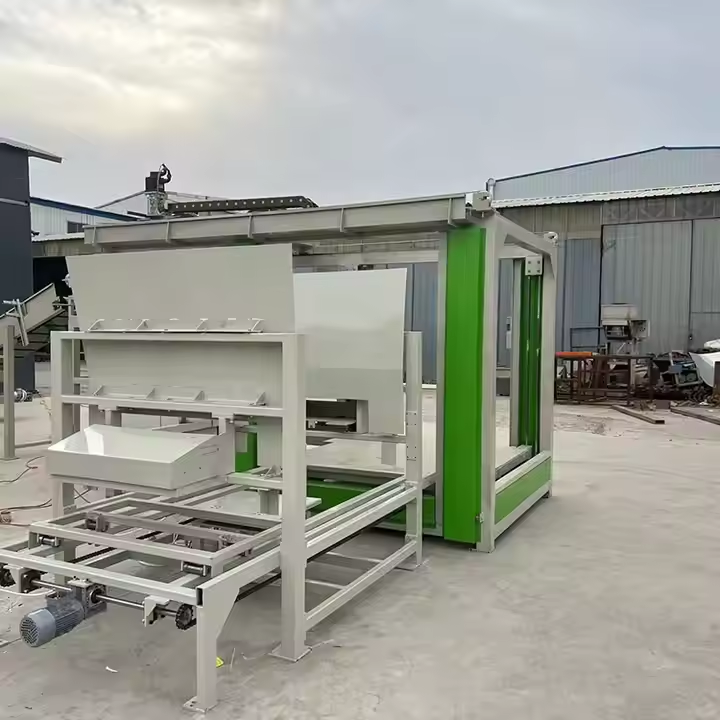
    These classic systems feature a gantry spanning the work area. Operating along straight X/Y/Z axes (sometimes with rotational axes), they deliver rigidity and stability. Ideal for uniform cases like food/beverage packaging, they excel in high-speed, high-precision repetitive tasks. Available in sizes from compact to industrial-scale, they handle loads from lightweight to exceptionally heavy materials like construction components.
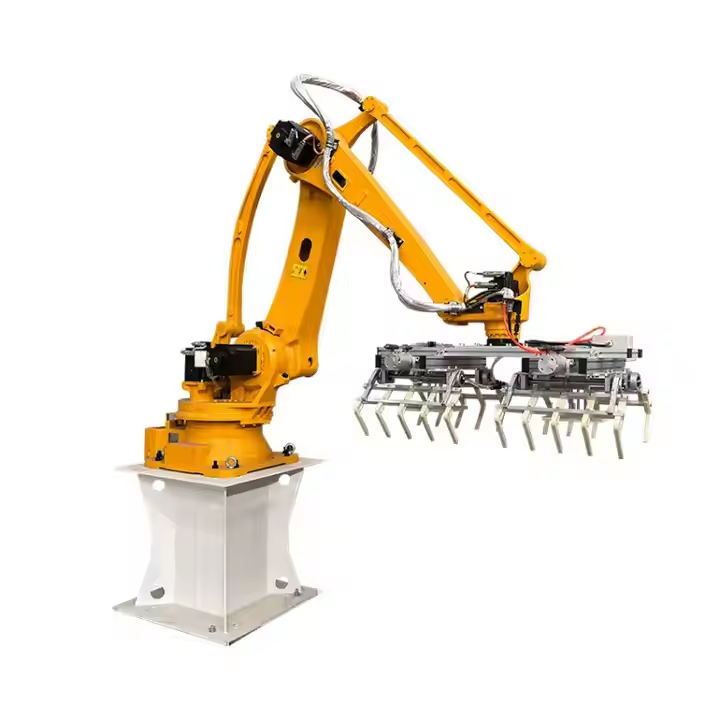
  2. Articulated Robot Palletizers:
    Mimicking human arm structure with rotating joints, these offer unparalleled flexibility. Their multi-axis design enables complex maneuvers through confined spaces, perfect for irregular stacking patterns, product rotation, or mixed-SKU pallets. Though not always the fastest option, their adaptability increases overall efficiency in industries like cosmetics, pharmaceuticals, and flexible manufacturing.
  3. SCARA Palletizers:
    Selective Compliance Assembly Robot Arms feature parallel rotational joints for horizontal movement with vertical linear motion. Renowned for rapid horizontal precision, they specialize in lightweight item stacking like electronics and small packages where vertical rigidity is less critical.
  4. Gantry Palletizers:
    Essentially reinforced Cartesian systems, these feature robust frameworks spanning large areas via overhead rails. With extended vertical reach, they dominate heavy industrial applications – handling massive tires, machinery parts, or bulk chemical sacks where extreme load capacity is paramount.
  5. Delta Parallel Palletizers:
    Distinguished by lightweight arms connected to moving platforms, these high-speed specialists deliver astonishing acceleration. Designed for ultralight packaging like snack bags, pharmaceuticals, and confectionery, they perform lightning-fast palletizing in food/pharma industries.

II. Gripping Methods: Adapting to Product Diversity
Different “hands” enable palletizers to handle varied loads:

  1. Clamp Grippers: Pneumatic/electric jaws grip rigid boxes and cartons – reliable and adjustable.
  2. Vacuum Systems: Suction cups lift smooth-surfaced items, while foam pads handle uneven bags like flour/feed sacks.
  3. Push Plates: Hydraulic/pneumatic rams slide unstable soft bags into position without direct handling.
  4. Hybrid/Custom Tools: Combined grippers or specialized attachments manage unique items like barrels, pipes, or mixed loads.

III. Deployment Configurations: Layout Integration
Integration methods determine operational flexibility:

  1. In-line Systems: Directly connected to production lines for real-time synchronization – maximum efficiency.
  2. Off-line Stations: Independent units drawing from buffer zones – ideal for multi-line feeding or maintenance flexibility.
  3. Mobile Units: Robotic arms mounted on autonomous vehicles (AMR/AGV) – deliver palletizing capabilities anywhere in facilities.

IV. Industry Applications: Universal Stacking Solutions
Palletizers serve virtually all sectors requiring organized pallet loads:

  • Food/Beverage: High-speed can/bottle stacking to bagged goods handling
  • Chemicals: Heavy-duty bag/barrel stacking in harsh environments
  • Pharma: Precision handling in sterile environments
  • Building Materials: Cement/tile palletizing
  • E-commerce: Intelligent parcel stacking with vision systems

V. Selection Strategy: Matching Needs
Choosing requires evaluating:

  • Product characteristics (weight/size/shape)
  • Throughput requirements
  • Pattern complexity
  • Space constraints
  • Environmental conditions
  • Budget/ROI considerations

VI. Future Evolution: Smarter, More Adaptive
Emerging technologies include:

  • 3D vision-guided random picking
  • AI-optimized stacking patterns
  • Digital twin simulations
  • Energy-efficient designs
  • Collaborative palletizing robots

Conclusion
From Cartesian workhorses to nimble Delta systems, palletizers have evolved into sophisticated solutions blending mechanics, sensing, and intelligence. Understanding their capabilities helps businesses build efficient, future-ready operations. At Yuhang Technology, we leverage China’s manufacturing excellence to deliver versatile palletizing solutions that enhance global supply chain resilience.

Column Palletizer Price & 5 Smart Ways to Reduce Its Energy Consumption

Column Palletizer Price & 5 Smart Ways to Reduce Its Energy Consumption

Investing in a column palletizer is a strategic decision to automate your production line’s end-of-line process. As you evaluate this investment, two of the most pressing questions are: “What is the column palletizer price?” and “What will it cost to run?” This guide provides a transparent look at current market prices and delivers five actionable strategies to minimize your column palletizer’s energy consumption, ensuring a better return on investment.

Column Palletizer Price: 2024 Market Overview

The price of a column palletizer varies significantly based on its load capacity, speed, construction, and features. Here’s a general pricing framework to help you plan your budget:

  • Standard Duty Models (≤ 500 kg):$50,000 - $90,000 USD
    • Ideal for mid-speed applications, standard pallet patterns, and common loads like boxes and bags. Features reliable PLC control and robust construction.
  • Heavy Duty Models (500 – 1500 kg):$90,000 - $150,000 USD
    • Built for high-speed, high-capacity lines. Handles heavy loads like bulk bags or large containers. Includes more powerful motors and reinforced lifting columns.
  • Custom/High-Speed Models (1500+ kg):$150,000 - $220,000+ USD
    • Designed for extreme-duty applications, requiring custom engineering, premium components, and advanced control systems for maximum throughput.

Key Factors That Influence Cost:

  • Load Capacity & Lifting Height: The core cost driver. Higher capacity and greater lift require more powerful motors and heavier-duty structural components.
  • Speed (Cycles Per Hour): Machines designed for higher speeds need more sophisticated controls and precision components.
  • Construction Quality: The quality of the steel structure, lifting columns, and guides directly impacts price and longevity.
  • Level of Automation: Basic models are less expensive. Integration with robotic layer formers or advanced software for complex patterns will increase the cost.
  • Brand & Support: Established international brands often come at a premium but offer global service networks.

5 Key Strategies to Reduce Your Column Palletizer’s Energy Consumption

The purchase price of a column palletizer is a one-time cost, but its electricity usage is a recurring expense. Here are five effective methods to reduce energy consumption and lower your total cost of ownership.

1. Optimize Lift and Lower Cycles with Smart Programming
The vertical lift motor is the primary consumer of energy.

  • Smooth Acceleration/Deceleration: Program the lift mechanism to ramp up and down smoothly instead of jerky, full-power movements. This reduces peak current draw.
  • Optimized Path Planning: Ensure the machine takes the most efficient path between the pick-up and drop-off points. Minimizing unnecessary vertical travel saves energy.

2. Invest in High-Efficiency (IE3/IE4) Motors
The motor technology is fundamental to efficiency.

  • Upgrade to Premium Efficiency Motors: If specifying a new machine, insist on IE3 (Premium Efficiency) or IE4 (Super Premium Efficiency) motors. They convert a higher percentage of electrical energy into mechanical motion, significantly reducing waste heat and power consumption over their lifespan.

3. Implement an Automatic Sleep/Idle Mode
A machine doesn’t need full power when the production line is paused.

  • Programmed Downtime: Configure the palletizer to automatically enter a low-power “sleep” state after a set period of inactivity (e.g., during a line stoppage or break).
  • Line Integration: Sync the palletizer’s controller with upstream equipment so it wakes up seamlessly when product arrives, eliminating energy waste without impacting productivity.

4. Right-Size the Machine for Your Application
Using an overpowered machine is inherently inefficient.

  • Match Capacity to Load: Select a column palletizer with a capacity that matches your typical product weight with a reasonable safety margin. A 1000kg machine palletizing 200kg loads is wasting energy to move its own oversized structure.
  • Assess Speed Needs: Choose a machine that meets your required cycles per hour without excessive overcapacity. Higher speed capabilities require more powerful motors that consume more energy, even at slower operational speeds.

5. Commit to a Strict Preventive Maintenance Schedule
A poorly maintained machine is an inefficient machine.

  • Regular Lubrication: Keep the lifting columns, guides, and chains properly lubricated. Reduced friction allows the motors to operate with less effort and lower energy input.
  • Check Alignment and Tightness: Ensure all mechanical components are aligned and fasteners are tight. Misalignment causes binding and forces the motor to work harder.
  • Inspect Motors and Drives: Schedule periodic checks for motor performance and drive calibration to ensure they are operating at peak efficiency.

Invest in Efficiency for Long-Term Savings

Understanding the column palletizer price is the first step in your investment. Implementing these energy-saving strategies is the second, crucial step to maximizing your return on investment by minimizing ongoing operational expenses for years to come.

Looking for an Energy-Efficient Column Palletizer?
we specialize in providing automated palletizing solutions that balance upfront cost with long-term efficiency and reliability. Our experts can help you select the right model and implement best practices to keep your energy costs low.

Contact us today for a free consultation and a detailed quote tailored to your specific production needs and efficiency goals.

Back to Top
Product has been added to your cart